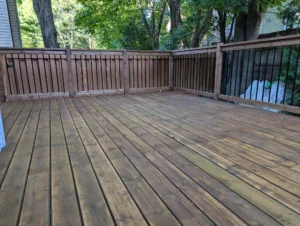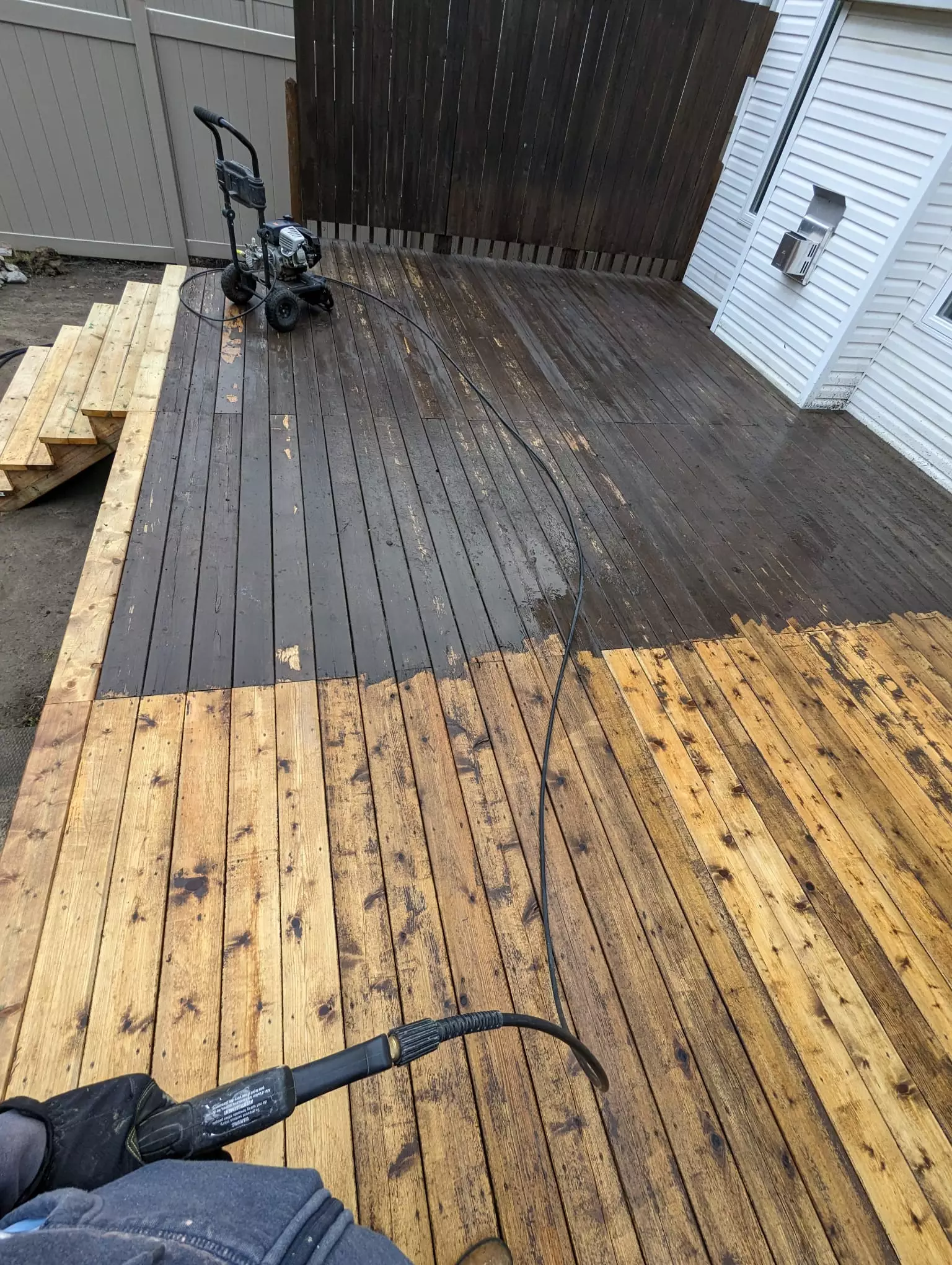
A deck can completely change how a backyard is used, but the best deck designs do not look like separate structures dropped into the middle of a property. They feel connected to the lawn, gardens, trees, pathways, fencing, and architecture of the home.
For homeowners in Orleans and throughout the Ottawa area, blending a deck with landscaping can create a softer, more natural outdoor environment while still providing plenty of space for dining, entertaining, and relaxing.
The difference often comes down to planning.
Instead of designing the deck first and landscaping whatever space remains, homeowners can consider the entire backyard as one project. Deck dimensions, stairs, garden beds, privacy planting, pathways, lighting, and outdoor structures can then work together.
Here are some practical ways to create that connection.
Start With the Entire Backyard, Not Just the Deck
Before deciding on the exact deck layout, look at the entire property.
Consider existing features such as:
- Mature trees
- Gardens
- Lawn areas
- Fencing
- Slopes
- Walkways
- Drainage patterns
- Views from inside the home
Some of these features may be worth preserving and incorporating into the new design.
For example, a mature tree may provide natural shade beside a future lounge area. An established garden could become the focal point visible from the dining table. An existing pathway could determine the most logical location for deck stairs.
Designing around the property often creates a more natural result than clearing everything and starting again.
Choose a Deck Size That Leaves Room for Landscaping
One of the easiest mistakes to make is building the largest deck the backyard can physically accommodate.
More square footage is not always better.
A deck can become visually overwhelming when it consumes nearly the entire yard. Leaving intentional areas for lawn, gardens, trees, and pathways creates contrast and helps soften the structure.
Before finalizing dimensions, determine how much deck space is actually required for:
- Outdoor furniture
- Dining
- Barbecuing
- Walking
- Entertaining
Once those needs are satisfied, preserving some green space can produce a much more balanced backyard.
Use Garden Beds Around the Deck Perimeter
Planting beds are one of the simplest ways to visually connect a deck with the surrounding landscape.
Instead of having the deck end abruptly against lawn, garden beds can create a softer transition.
Depending on the property, homeowners might incorporate:
- Perennials
- Ornamental grasses
- Shrubs
- Groundcover
- Seasonal flowers
Plants with different heights can create greater depth.
Lower plants near the deck maintain sightlines, while taller shrubs can be positioned farther back to provide structure and privacy.
Incorporate Native and Climate-Appropriate Plants
Plants that are well suited to local conditions can make landscaping easier to maintain.
When choosing plants for an Orleans backyard, consider factors including:
- Sun exposure
- Soil conditions
- Moisture
- Mature plant size
- Winter hardiness
Native and regionally appropriate plants can also help create a backyard that feels naturally connected to its surroundings.
Instead of choosing plants purely because they look attractive at the garden centre, think about how they will look after several years of growth.
Use Ornamental Grasses to Soften Deck Edges
Ornamental grasses can work particularly well beside contemporary decks.
Their movement and texture provide a natural contrast against the straight lines of:
- Deck boards
- Railings
- Stairs
- Privacy screens
Depending on the variety and location, grasses may also provide some seasonal privacy.
They can be especially effective around:
- Deck corners
- Stair landings
- Privacy screens
- Pergola areas
The result is a softer transition between constructed and planted areas.
Create Wide Stairs That Lead Into the Landscape
Deck stairs can play an important role in connecting an elevated outdoor space with the yard.
Instead of installing narrow stairs in an isolated corner, consider whether wider stairs could create a more inviting transition.
They might lead directly toward:
- A garden path
- Lawn
- Patio
- Fire feature
- Another seating area
Landscaping beside the staircase can further integrate it with the property.
Plants, stone, and garden beds around the base of the stairs can make the transition feel intentional rather than abrupt.
Connect the Deck to a Garden Path
A pathway provides a visual and physical connection between the deck and other parts of the backyard.
Rather than having stairs end directly on the lawn, consider connecting them to a pathway leading toward:
- A side gate
- Garden
- Shed
- Fire pit
- Secondary seating area
Materials might include stone, pavers, or gravel depending on the design.
Curved paths can create a softer landscape-oriented appearance, while straight paths may complement more contemporary architecture.
Coordinate Deck Colours With the Landscape
Deck colour has a major influence on how naturally the structure fits into the backyard.
Warm brown and wood-inspired tones can complement:
- Green landscaping
- Natural stone
- Cedar fencing
- Mature trees
Contemporary grey decking can work beautifully when balanced with abundant greenery and darker architectural accents.
Rather than selecting the deck colour in isolation, compare samples against:
- Home siding
- Fence
- Existing stone
- Plants
- Outdoor furniture
The goal is to create a coordinated palette across the entire property.
Use Natural Wood Elements
Even when composite decking is selected, natural wood can still be incorporated elsewhere.
For example, homeowners might combine composite decking with:
- Cedar privacy screens
- Wood pergolas
- Timber planters
- Decorative wood details
This provides some of the warmth of natural materials while allowing the main deck surface to remain relatively low maintenance.
Mixing materials intentionally can create more visual depth than using the exact same finish everywhere.
Incorporate Built-In Planters
Built-in planters can physically bring landscaping onto the deck.
They may be positioned:
- Along deck edges
- Beside stairs
- Around seating areas
- Near privacy screens
- At transitions between deck levels
Planters can contain seasonal flowers, grasses, herbs, or other appropriate vegetation.
The design should account for drainage so moisture does not become trapped against deck components.
Design Around Existing Trees When Practical
Mature trees can be one of the most valuable features in an established Orleans backyard.
They may provide:
- Shade
- Privacy
- Character
- Seasonal interest
Where practical, preserving healthy trees can help a new deck feel established much sooner.
However, decks should not simply be constructed tightly around tree trunks without considering future growth.
Trees continue expanding, and roots can also influence construction.
Where existing trees are part of the design, appropriate clearance and professional advice may be necessary.
Add a Pergola to Introduce Vertical Structure
Landscaping naturally exists at multiple heights.
A deck alone is predominantly horizontal.
Adding a pergola introduces vertical structure and can help connect the deck visually with trees and taller landscaping.
A pergola can also define:
- Dining space
- Lounge seating
- Outdoor entertainment areas
Plants and landscaping around pergola posts can further soften the structure.
Depending on the design, privacy screens or climbing plants may also be incorporated.
Blend Privacy Screens With Planting
Privacy screens are useful, but large uninterrupted panels can sometimes feel visually heavy.
Landscaping can soften them.
Consider placing:
- Ornamental grasses
- Shrubs
- Planters
- Climbing plants
near privacy structures.
This creates layers rather than one solid barrier.
For suburban properties where neighbouring homes are relatively close, combining structural screening with vegetation can create privacy without making the backyard feel overly enclosed.
Create Layers of Landscaping
Natural landscapes rarely consist of plants at one identical height.
Using layers can make residential landscaping feel more established.
A simple arrangement might include:
Deck → low perennials → ornamental grasses → shrubs → fence
This creates depth when viewed from the deck.
Layering can also make property boundaries feel less obvious because the fence becomes part of the background rather than the dominant visual element.
Use Curves to Contrast With Straight Deck Lines
Most decks are built using strong geometric lines.
Garden beds don’t necessarily need to follow them exactly.
Curved planting beds can provide an attractive contrast against rectangular decks.
For example, a curved garden around one deck corner can soften the transition into the lawn.
This technique works particularly well in traditional and natural-style landscapes.
Contemporary properties may instead benefit from cleaner geometric garden beds that repeat the architecture of the deck.
Incorporate Stone Into the Design
Stone can create a strong connection between decking and landscaping.
Possible uses include:
- Garden borders
- Pathways
- Decorative gravel
- Patio areas
- Landscape accents
The combination of wood-inspired decking, stone, and vegetation creates a varied material palette without feeling overly complicated.
Stone can also help create attractive transitions around the base of deck stairs.
Create a Lower Patio Beside a Raised Deck
For elevated decks, adding a ground-level patio can help bridge the height difference between the deck and landscape.
For example:
Upper Deck
Outdoor dining and barbecue.
Lower Patio
Lounge furniture or fire table.
Surrounding Yard
Gardens and lawn.
Wide stairs can connect the two levels.
This approach can make a raised deck feel much more integrated with the backyard while creating additional entertainment space.
Use Landscaping to Define Outdoor Zones
Plants can separate different backyard activities without requiring walls.
For example, a line of ornamental grasses might subtly separate:
- Dining from lounging
- Deck from lawn
- Entertainment space from garden
Planters can achieve a similar effect on the deck itself.
This creates organization while preserving an open feeling.
Keep Some Open Lawn
Not every part of a backyard needs to contain a feature.
Open lawn provides valuable visual breathing room.
It can also be useful for:
- Children
- Pets
- Outdoor games
- Additional gathering space
A balanced backyard often includes a combination of deck, landscaping, and open space rather than maximizing any single element.
Incorporate Landscape Lighting
Lighting can connect the deck and landscaping after sunset.
Instead of illuminating only the deck, consider extending lighting into the yard.
Potential locations include:
- Deck stairs
- Pathways
- Garden beds
- Trees
- Pergolas
This creates visual depth.
Without landscape lighting, the backyard beyond the deck can disappear into darkness at night. Illuminating selected plants and pathways makes the entire property feel like part of the outdoor living space.
Think About the View From the Deck
Landscaping should be planned from the perspective of people actually using the deck.
Sit or stand where the dining table and lounge furniture will eventually be located.
What will people see?
Ideally, important views should lead toward:
- Gardens
- Trees
- Attractive privacy screens
- Landscaping
- Other outdoor features
Avoid positioning the primary seating area so that its dominant view is a shed, garbage storage area, or another purely functional feature if the layout allows an alternative.
Think About the View From Inside Too
The relationship works both ways.
Your deck and landscaping will also be visible from inside the home.
Consider the view through:
- Kitchen windows
- Patio doors
- Dining-room windows
- Living spaces
A thoughtfully positioned tree, pergola, garden, or privacy screen can create an attractive view even during months when the deck is used less frequently.
Choose Low-Maintenance Landscaping Where Appropriate
A natural-looking backyard doesn’t necessarily need to involve hours of gardening every week.
Homeowners who want easier maintenance can consider:
- Perennial planting
- Appropriate native species
- Mulched beds
- Ornamental grasses
- Carefully selected shrubs
Reducing unnecessary lawn can also lower mowing requirements.
The objective is to create landscaping that complements how much time the household realistically wants to spend maintaining it.
Avoid Planting Too Close to the Structure
While vegetation can beautifully soften a deck, plants still need adequate space.
Consider their mature:
- Height
- Width
- Root systems
Plants positioned too close to stairs, railings, or structural components may eventually interfere with circulation or require constant trimming.
Planning around mature dimensions helps create landscaping that improves with age rather than becoming increasingly difficult to manage.
Coordinate the Fence With the Deck and Landscaping
The fence forms the visual background of many suburban backyards.
Its material and colour should therefore be considered as part of the overall design.
A natural cedar fence can complement warm deck colours and greenery.
A darker contemporary fence can create dramatic contrast behind ornamental grasses and lighter plants.
The goal is not necessarily to match everything exactly.
Instead, the materials should feel related.
Plan Drainage Before Adding Landscaping
Decks, gardens, patios, and pathways can all affect how water moves through a property.
Good backyard design should account for drainage before everything is installed.
Water should be directed appropriately rather than allowed to collect:
- Beneath the deck
- Beside foundations
- Around stairs
- Within garden beds
This is particularly important in Ottawa because snowmelt and freeze-thaw conditions can create significant seasonal moisture.
Drainage may not be the most visually exciting part of landscaping, but it is essential to long-term performance.
FAQs About Blending Decks With Landscaping
What should I plant around my deck?
The best plants depend on sunlight, soil, moisture, available space, maintenance preferences, and desired privacy. Perennials, ornamental grasses, shrubs, and regionally appropriate plants can all work well.
Should landscaping be planned before or after the deck?
Ideally, the deck and landscaping should be planned together. This allows stairs, pathways, gardens, privacy, and outdoor living zones to connect naturally.
How can I make a raised deck look less bulky?
Landscaping around posts and stairs, wider transitions, appropriate screening, and lower-level garden beds can help visually soften an elevated structure.
Can I build a deck around an existing tree?
Potentially, but mature growth, roots, structural requirements, and appropriate clearances need to be considered carefully.
Does composite decking work with natural landscaping?
Yes. Wood-inspired composite finishes can complement plants, stone, fencing, and natural wood features while reducing some routine refinishing requirements.
How can landscaping improve deck privacy?
Shrubs, ornamental grasses, small trees, planters, and other vegetation can help break sightlines. Combining landscaping with targeted privacy screens or fencing can provide more immediate and effective privacy.
Final Thoughts
Blending a deck with landscaping is ultimately about making the backyard feel like one complete environment. Instead of allowing the deck, lawn, fence, gardens, and pathways to compete for attention, thoughtful planning can make each feature support the others.
For Orleans homeowners, this may mean preserving mature greenery, creating garden beds around a new deck, using wide stairs to transition into the lawn, adding integrated planters, or combining privacy screens with layered planting. The objective isn’t to hide the deck. It’s to make the structure feel naturally connected to the property.
For additional inspiration, homeowners can browse deck landscaping ideas on Houzz to see how different properties combine decking, garden beds, stairs, pathways, privacy features, and mature vegetation.
Homeowners interested in incorporating native and climate-appropriate plants can also explore resources from the Canadian Wildlife Federation, while Landscape Ontario provides useful information and inspiration related to landscaping in Ontario. For deck planning and material ideas, Trex offers examples of deck layouts, built-in features, stairs, and outdoor living designs that can be incorporated alongside landscaping.
Before making substantial changes to a property, homeowners can also review current planning, building, and renovation information through the City of Ottawa. Planning the deck, landscaping, drainage, privacy, and future backyard improvements together from the beginning can create an Orleans backyard that feels more established, comfortable, and naturally connected for years to come.