Choosing the right fence material is one of the most important decisions you make when improving your Ottawa‑area backyard. In neighbourhoods like Ottawa proper, Orleans, Kanata, Nepean, Barrhaven, Carleton Place, and surrounding communities, fences are essential for privacy, security, pet containment, property definition, and even outdoor aesthetics.
Two of the most common fence materials homeowners consider for residential properties are cedar and pressure‑treated wood. Both are wood‑based, both are widely used, and both perform very well in many applications — but they behave differently once installed, especially under Ontario’s challenging climate.
Ottawa’s weather includes:
- freezing winters with heavy snow
- freeze–thaw cycles
- humid springs
- warm, sun‑intense summers
- frequent rain and moisture
These elements stress outdoor wood structures, so choosing the right type of wood — and maintaining it properly — has a huge impact on performance and lifespan.
Here’s an in‑depth comparison of cedar vs pressure‑treated wood fencing to help you decide what works best for your backyard in Ottawa’s climate.
What Is Cedar Fence?
Cedar fencing is crafted from boards milled from cedar trees — usually Western Red Cedar, known for its natural resistance to rot, insects, and decay.
Key characteristics:
- Naturally durable
- Distinctive warm colour and grain
- Aromatic scent
- Doesn’t require chemical preservatives
- Excellent resistance to moisture compared to untreated wood
Cedar’s natural oils help protect the wood, which means it can last longer than many other untreated woods even without heavy chemical treatment. Many homeowners value cedar because of its rich look and natural decay resistance — a big plus in environments with frequent moisture exposure.
What Is Pressure‑Treated Wood?
Pressure‑treated wood starts as regular lumber (often pine), but is forced under pressure with chemical preservatives that protect it from rot, fungus, and insect damage.
Key characteristics:
- Lower upfront cost than cedar
- Chemical treatment increases decay and insect resistance
- Common choice for structural outdoor wood components
- Often the “standard” wood type for fences, decks, and outdoor projects
Pressure‑treated lumber became widely popular because its treatment allows it to resist many of the same risks cedar naturally avoids — at a lower price point.
Cost Comparison
Pressure‑Treated Wood:
- Generally less expensive upfront
- Widely available
- Lower material cost per linear foot
Cedar:
- Higher initial cost
- More expensive materials lead to higher project quotes
- Costs can vary widely based on board thickness and style
While cedar may cost more up front, many homeowners consider it an investment in appearance and long‑term wood performance — especially where aesthetics matter.
Durability in Ottawa Weather
Pressure‑Treated Wood
Pressure‑treated wood resists rot and insect damage better than untreated lumber. However:
- It can still warp, split, or check over time
- Moisture can cause boards to swell and shrink with temperature changes
- The chemical treatment doesn’t stop all forms of decay — just slows them
Cedar Wood
Cedar naturally withstands many of the conditions that cause wood deterioration, including moisture absorption and fungal growth. Ontario’s climate — with frequent rain and high humidity — exposes wood to moisture for many months of the year.
Cedar’s natural oils mean boards:
- Are naturally rot‑resistant
- Handle moisture better without checking or warping as dramatically
- Age more gracefully over time
While cedar still requires maintenance to preserve appearance and stop weathering, it often ages more attractively and predictably than pressure‑treated lumber.
Appearance and Aesthetic Longevity
If style is important — and it usually is — the visual difference matters:
Cedar Fences
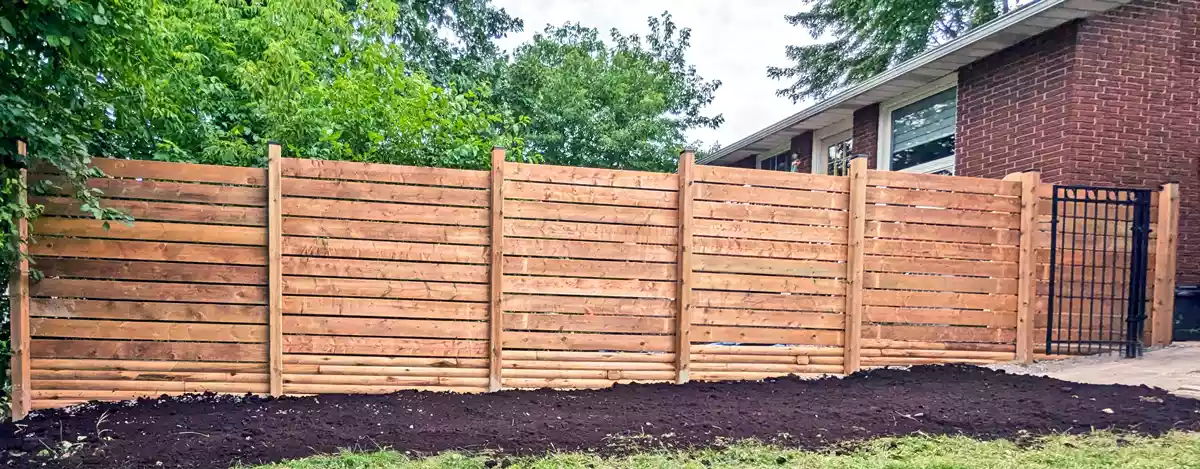
- Rich, warm tones
- Natural grain and beauty
- Can be stained or left to weather naturally to a silvery grey
- Complements landscape features, stonework, and modern outdoor design
Pressure‑Treated Wood Fences
- Often greener or paler at installation
- Can be stained but may require more preparation
- Generally more “utilitarian” in appearance without finishing
Homeowners who want a “designer” backyard often prefer cedar for its visual appeal.
Maintenance Requirements
Cedar
- Clean annually
- Optional sealing or staining to maintain original colour
- Can be left to weather naturally
- Less risk of rot — but surface checking and colour changes occur without maintenance
Pressure‑Treated Wood
- Needs staining or sealing sooner
- Requires more frequent inspection for warping and splitting
- Can show signs of aging earlier in harsh climates
Both materials benefit from good maintenance, but cedar’s natural resistance often means fewer repairs over time if installed well.
Longevity in Ontario’s Climate
When properly installed and maintained:
- Cedar fences can last 20–30 years or more
- Pressure‑treated fences typically last 15–25 years
Actual lifespan depends heavily on:
- installation quality
- ground moisture conditions
- exposure to sun and wind
- maintenance frequency
Cedar’s natural decay resistance often leads to a longer effective lifespan in moist climates.
Environmental Considerations
Cedar
- Natural product
- No chemical preservatives required
- Biodegradable at end of life (with fewer chemical residues)
Pressure‑Treated Wood
- Treated with chemicals for rot resistance
- Some homeowners prefer to avoid preservatives for environmental reasons
- Disposal requires awareness of local waste rules
If sustainability is a priority, cedar often appeals to eco‑minded homeowners.
Privacy, Noise, and Design Integration
Cedar and pressure‑treated wood both provide excellent privacy, but cedar’s premium look often integrates better with landscaping, patios, and outdoor living spaces.
For example:
- Cedar pairs well with composite decking
- It complements outdoor kitchens, lounge areas, and pergolas
- It creates a more cohesive look with high‑end outdoor designs
Pressure‑treated wood is practical and functional but tends to look more utilitarian unless finished carefully.
FAQs About Cedar vs Pressure‑Treated Fencing
Which material resists moisture better?
Cedar naturally resists moisture without chemical treatment, making it very durable in Ontario’s wet and variable climate.
Which is more cost‑effective long‑term?
While pressure‑treated wood is cheaper upfront, cedar often lasts longer and requires fewer repairs, making it a better long‑term choice for many homeowners.
Can cedar be stained or left natural?
Yes! Cedar can be stained to preserve colour, or left to naturally age to a silvery grey patina.
Is pressure‑treated lumber safe for residential fences?
Yes — it’s widely used and safe when properly installed. Just understand it requires more maintenance to avoid warping and splitting.
What about maintenance costs?
Cedar generally needs less frequent sealing and fewer repairs over time, while pressure‑treated wood often requires more upkeep in Ottawa’s climate.
Final Thoughts
Choosing between cedar and pressure‑treated wood comes down to your priorities and how you envision your backyard space performing over time in Ottawa’s weather.
- Cedar is ideal if you want a premium look, natural durability, and a longer lifespan with less visual degradation.
- Pressure‑treated wood is a great option if your priority is budget‑friendly installation with adequate performance and structural reliability.
Homeowners in Orleans, Nepean, Kanata, and Barrhaven are increasingly choosing cedar for its combination of beauty and durability, but pressure‑treated fencing remains a practical and functional choice for many properties.
Reliable resources from This Old House and practical comparisons on Family Handyman provide excellent guidance on choosing the right wood fencing for long‑term outdoor performance. For visual inspiration and current design trends, galleries on Houzz and fence style trends from Architectural Digest continue to showcase what’s working for modern suburban outdoor spaces.