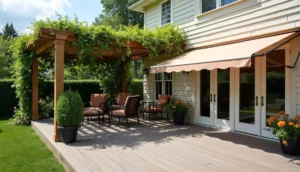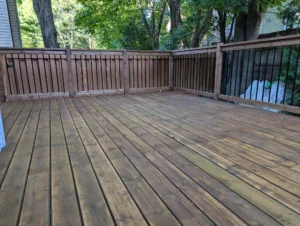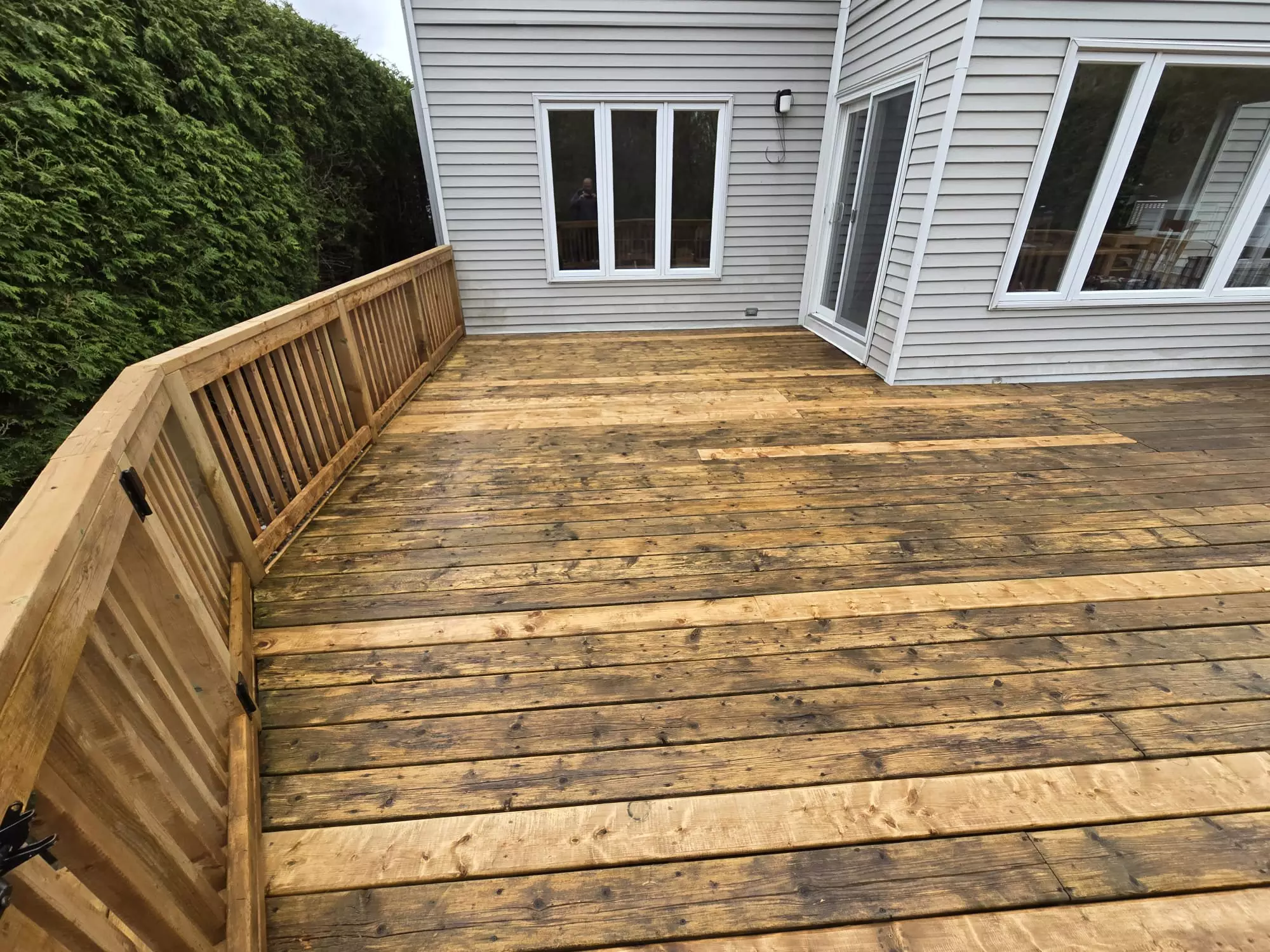
A beautiful deck does not have to feel like a separate structure sitting in the middle of the backyard. When garden beds are thoughtfully incorporated into the design, the transition between the deck and surrounding landscape can feel softer, more natural, and much more inviting.
For homeowners in Carleton Place, combining a custom deck with carefully positioned garden beds is also a practical way to make better use of the backyard. Plants can provide colour, privacy, shade, visual interest, and separation between different outdoor living zones without requiring large walls or heavy structures.
The most successful designs consider the deck and landscaping together from the beginning. Instead of constructing the deck first and trying to find somewhere for plants afterward, homeowners can plan stairs, seating, pathways, railings, garden beds, and entertaining areas as one connected outdoor environment.
Here are some of the best ways to incorporate garden beds into a deck design in Carleton Place.
Start With a Complete Backyard Plan
Before deciding where garden beds should go, look at the entire backyard.
Consider the location of the house, deck, lawn, fences, gates, mature trees, drainage routes, and existing landscaping. Also think about how people will move between these areas.
The deck should not occupy all the best space while landscaping gets pushed into whatever remains.
A coordinated plan can create a natural sequence from the house to the deck, through the garden, and into the rest of the yard.
Use Garden Beds to Soften Deck Edges
One of the simplest strategies is creating garden beds along portions of the deck perimeter.
Without landscaping, an elevated deck can sometimes appear visually heavy, particularly when the framing and supports are visible from the yard.
Plants help soften those edges.
Low-growing plants near the deck can gradually transition toward taller plants farther away, creating layers of greenery rather than an abrupt change between structure and lawn.
This can make the deck feel like part of the landscape rather than something placed on top of it.
Wrap Garden Beds Around Deck Corners
Deck corners are excellent locations for landscaping.
Instead of allowing a rectangular deck to meet the lawn with sharp edges on every side, curved or carefully shaped garden beds can soften those corners.
This approach works particularly well with simple rectangular decks.
The deck maintains an efficient construction-friendly shape while the landscaping introduces softer lines around it.
The contrast between clean carpentry and organic planting can create a balanced backyard design.
Create Built-In Planters
Built-in planters can integrate greenery directly into the deck.
Depending on the design, planters might be incorporated near seating areas, stairs, privacy screens, or deck corners.
They can provide a home for seasonal flowers, herbs, ornamental plants, or other vegetation appropriate for container growing.
However, drainage needs careful consideration.
Water should not be allowed to remain trapped against decking, framing, or the house. Planter construction should keep soil and persistent moisture appropriately separated from vulnerable structural components.
Use Planters to Define Different Deck Zones
Large decks often work better when they are divided into smaller functional areas.
Planters can help create this separation without building walls.
For example, a planter could visually distinguish the dining area from a lounge space.
Because plants create a softer boundary than solid screens, both areas remain visually connected.
This can be especially useful when homeowners want an open backyard that still feels organized.
Combine Garden Beds With Built-In Seating
Built-in seating and landscaping can work beautifully together.
A bench positioned along the deck perimeter can overlook a garden bed filled with greenery.
Another possibility is incorporating planters near the ends of a bench.
This creates an outdoor lounge that feels surrounded by landscaping rather than furniture alone.
The combination can also reduce the need for numerous freestanding chairs and planters.
Create a Garden Around the Stairs
Deck stairs are an important transition between the structure and backyard.
Landscaping around them can make that transition feel much more natural.
Garden beds positioned beside the stairs can visually connect the elevated deck with ground-level planting.
The vegetation should be kept clear of important walking surfaces and should not obstruct visibility around stairs.
With thoughtful placement, the staircase becomes part of the landscape instead of simply a functional exit.
Use Wider Stairs to Connect With the Garden
Where space permits, wider deck stairs can create a stronger visual relationship with the backyard.
Instead of descending through a narrow staircase, homeowners arrive at a broad garden transition.
Planting beds can frame each side.
A pathway might then continue toward the lawn, patio, shed, or another destination.
This creates a natural progression through the property.
Build a Garden Path From the Deck
A garden pathway can extend the visual influence of the deck farther into the backyard.
The path could begin at the bottom of the stairs and travel between planting beds toward another feature.
That destination might be a small patio, seating area, garden shed, or rear gate.
Even in a relatively compact backyard, a pathway creates movement.
The eye follows it through the landscape, which can make the property feel larger.
Create Layered Garden Beds
Garden beds often look more natural when plants are arranged at different heights.
Instead of planting a single row of identical shrubs, consider creating layers.
Lower plants can sit closer to the deck or pathway.
Medium-height plants can occupy the middle.
Taller shrubs or ornamental plants can form the background where appropriate.
The result creates depth and visual interest.
It can also help soften fences and neighbouring structures.
Use Garden Beds for Privacy
Plants can provide a softer alternative to completely enclosing a deck with privacy screens.
Where neighbouring sightlines are an issue, strategically positioned landscaping can help.
Depending on the site, suitable shrubs, ornamental grasses, or small trees may provide varying degrees of screening.
This approach can be combined with a partial privacy screen when additional coverage is needed.
The structural screen provides immediate privacy while landscaping gradually softens the overall appearance.
Combine a Privacy Screen With Planting
Privacy screens can sometimes look stark when used by themselves.
Adding a garden bed nearby can change the appearance significantly.
Plants around the base of the screen help visually connect it with the rest of the yard.
The combination of wood or composite materials with greenery can create a warmer and more natural outdoor environment.
Climbing plants may also be considered where the selected species and screen design are appropriate.
Create a Garden Behind Built-In Benches
If the deck includes perimeter seating, consider placing a garden bed behind or beyond the bench.
Instead of looking directly toward a fence, people sitting on the deck can enjoy greenery.
This can be particularly effective around conversation areas.
It provides visual interest without using valuable deck floor space for multiple containers.
Consider Raised Garden Beds Near the Deck
Raised garden beds can create a strong visual relationship with an elevated deck.
They may be particularly useful for herbs, vegetables, or ornamental planting.
Positioning raised beds near the deck can also make gardening more convenient.
However, leave enough space for access and maintenance.
Homeowners should be able to reach the beds comfortably without squeezing between structures.
Create an Herb Garden Near the Cooking Area
Homeowners who enjoy outdoor cooking may appreciate having herbs close to the deck.
A small herb garden can be positioned near the outdoor kitchen or barbecue area while remaining appropriately separated from heat-producing equipment.
Depending on sunlight and growing conditions, homeowners might consider commonly used culinary herbs suited to their garden plan.
The convenience of stepping off the deck to collect fresh herbs can make the landscaping functional as well as attractive.
Keep Plants Away From Barbecues
Plants and cooking equipment need appropriate separation.
Barbecues and other outdoor cooking appliances generate significant heat.
Vegetation should not interfere with manufacturer-required clearances or ventilation.
The same applies to combustible privacy screens and other structures.
Design the cooking zone first around safety and appliance requirements, then position landscaping accordingly.
Use Garden Beds to Frame a Dining Area
Landscaping can create a beautiful backdrop for outdoor dining.
A garden bed positioned beside or beyond the dining area can introduce greenery without reducing deck floor space.
Plants can also soften views toward fences or neighbouring properties.
This can make outdoor meals feel more private and relaxing.
Surround a Lounge Area With Greenery
Conversation areas benefit particularly from landscaping.
Instead of surrounding lounge furniture entirely with railings and screens, use plants to create a softer environment.
Garden beds around one or two sides of the deck can make the lounge feel nestled into the backyard.
This approach can work especially well with lower decks where seating sits closer to garden level.
Consider a Ground-Level Deck Surrounded by Gardens
Ground-level or lower-profile decks can integrate particularly well with landscaping.
Because there is less vertical separation between the deck and soil, plants can appear to grow naturally around the outdoor living area.
The deck may function almost like a platform within the garden.
This can create an intimate backyard retreat while maintaining clear pathways and practical access.
Use Landscaping Around a Multi-Level Deck
Multi-level decks naturally create several transitions where landscaping can be introduced.
Plants can soften:
- Level changes
- Stair landings
- Deck corners
- Lower patios
Instead of one large structure dominating the yard, landscaping breaks the deck into smaller visual components.
This can be particularly useful on properties with changes in grade.
Create a Deck-and-Patio Garden Transition
A deck does not have to connect directly to lawn.
Another option is:
House → deck → garden → patio
or
House → deck → patio → garden
The garden beds help connect different hard surfaces.
This allows wood or composite decking, stone, and greenery to work together rather than compete visually.
Preserve Mature Landscaping When Possible
Existing trees and established plants can add significant character to a backyard.
When planning a new deck, homeowners should identify which existing landscape features are worth preserving.
A mature tree may become an important focal point rather than an obstacle.
However, construction around trees requires careful planning to avoid unnecessary root or trunk damage and to allow for future growth.
Professional advice may be appropriate when significant trees are close to the proposed structure.
Avoid Building Too Close to Tree Trunks
Designing a deck tightly around an existing tree may look attractive initially, but trees continue to grow and move.
Branches may also drop debris onto the deck, while roots and changing trunk dimensions can affect nearby construction.
Adequate separation should be considered.
This is particularly important because the relationship between trees and decks changes over many years.
Use a Feature Tree as a Focal Point
A carefully positioned ornamental or existing tree can create a destination for the eye.
Instead of looking from the deck directly toward a plain rear fence, the viewer sees a landscaped focal point.
This can make the backyard feel deeper.
At night, subtle landscape lighting may further emphasize the feature.
Use Garden Beds to Hide Under-Deck Areas
Elevated decks can leave visible framing, posts, and open space underneath.
Depending on the design, landscaping can help soften these areas.
Shrubs and other appropriately positioned plants may reduce direct views toward structural components without preventing necessary access or ventilation.
The goal should be integration rather than attempting to completely hide the structure.
Don’t Block Access for Deck Maintenance
Landscaping should not make the deck impossible to maintain.
Leave enough access around areas that may eventually require inspection or repair.
This is particularly important around:
- Posts
- Stairs
- Utility connections
- Drainage areas
Plants grow.
A garden that appears appropriately sized during installation can become much larger several years later.
Choose species and spacing with mature dimensions in mind.
Think About Roots
Roots matter when planting close to structures.
Large trees and certain shrubs may develop extensive root systems.
Plant selection should consider mature size, root characteristics, and distance from foundations, deck footings, patios, fences, and underground services.
Choosing the right plant for the right location is far easier than dealing with conflicts later.
Consider Sun and Shade Created by the Deck
The deck itself can change growing conditions.
Areas beside an elevated deck may receive full sunlight, while spaces underneath or along the north-facing side may receive significantly less.
Choose plants according to actual conditions.
Observe how sunlight moves across the property throughout the day.
A plant that thrives in one corner may struggle only a few metres away.
Choose Plants for Carleton Place Conditions
Garden design should reflect local climate and site conditions.
Factors such as winter temperatures, soil, moisture, drainage, sunlight, and wind exposure influence plant performance.
Native and well-adapted species can often be valuable components of a resilient landscape.
Homeowners should still match each species to the specific conditions of their property rather than assuming every locally suitable plant will work everywhere.
Add Seasonal Interest
A well-planned garden can provide interest beyond peak summer.
Different plants may contribute spring flowers, summer foliage, autumn colour, winter structure, or seed heads.
This is particularly valuable around a deck because homeowners see the landscape from inside the house throughout the year.
Even when the deck is covered in snow, attractive garden structure can improve the backyard view.
Use Ornamental Grasses Carefully
Ornamental grasses can introduce movement and texture around decks.
They may also provide partial screening.
However, species vary considerably in mature height and spread.
Select varieties appropriate for the available space and maintain enough clearance from stairs, pathways, cooking areas, and other features.
Use Container Gardens for Flexibility
Not every plant needs a permanent garden bed.
Containers provide flexibility.
They can be repositioned throughout the season and changed as design preferences evolve.
Containers are particularly useful around dining and conversation areas where homeowners may want colour without permanently changing the landscape.
Larger containers can also help define deck zones.
Don’t Overcrowd the Deck With Planters
Plants can enhance a deck, but too many containers can reduce usable space.
Large collections of small pots may also create visual clutter.
A few carefully selected planters often have greater impact.
Keep important circulation routes clear and leave enough space for furniture.
Integrate Lighting Into the Garden
Deck lighting and landscape lighting should be considered together.
Instead of illuminating only the deck, extend subtle lighting into nearby garden beds.
Possible focal points include trees, pathways, ornamental plants, or architectural features.
This creates visual depth after sunset.
The backyard remains visible beyond the deck rather than disappearing into darkness.
Light Pathways and Stairs
Where garden beds border circulation routes, lighting can help identify pathways and elevation changes.
Exterior lighting should support safe movement without overwhelming the landscape.
Low-level fixtures can often provide enough guidance while maintaining a relaxed atmosphere.
Consider Irrigation Before Construction
If garden beds will require irrigation, think about it before the deck and landscaping are completed.
Running appropriate lines before finishing hardscaping can be much easier than adding them afterward.
Some homeowners may prefer simple manual watering, while larger landscapes may benefit from a more organized irrigation approach.
The right solution depends on garden size and maintenance preferences.
Make Sure Water Drains Away Properly
Garden beds should not create drainage problems around the deck or house.
Soil grading, edging, downspouts, deck foundations, and hard surfaces should work together to direct water appropriately.
Avoid creating areas where water consistently collects against deck posts, stairs, or the home’s foundation.
Drainage planning is particularly important in climates with snowmelt and freeze-thaw conditions.
Create a Low-Maintenance Garden
Homeowners who choose low-maintenance decking may also want landscaping that does not require constant attention.
A thoughtful garden might use appropriately selected perennials, shrubs, mulch, and other durable features rather than relying entirely on high-maintenance seasonal planting.
The goal is not to eliminate maintenance completely.
It is to create a landscape whose maintenance requirements match the homeowner’s lifestyle.
Use Mulch to Create a Finished Appearance
Mulch can give garden beds a clean, defined appearance while helping manage soil moisture and weeds.
The specific material should suit the planting and overall backyard style.
Keep mulch and soil appropriately separated from structural wood and other areas where persistent moisture could cause problems.
Coordinate Garden Shapes With the Deck
Landscaping does not have to copy the geometry of the deck exactly.
In fact, contrasting shapes can work beautifully.
A rectangular deck can be softened with gently curved garden beds.
A contemporary deck might instead use straight, structured planting beds to reinforce its architectural lines.
The choice depends on whether the desired backyard style is natural, traditional, or modern.
Repeat Materials Throughout the Backyard
A cohesive backyard often repeats a few colours or materials.
For example, deck trim might coordinate with planter edging, pergola details, or fencing.
Stone used around garden beds might reappear in a patio or pathway.
Repeating materials creates visual continuity.
The backyard then feels like one planned environment rather than several unrelated projects.
Keep the Centre of a Small Backyard Open
On smaller Carleton Place properties, avoid allowing garden beds to consume every remaining piece of lawn.
Perimeter landscaping can preserve an open central area.
This makes the yard more versatile for children, pets, entertaining, or future projects.
It can also make the property feel larger.
Design the Garden From the Deck View
Most landscaping is viewed from multiple locations.
Think about what homeowners will see while sitting at the dining table or lounge area.
A beautiful garden positioned directly behind the seating may not be visible to the people using the deck.
Place important landscape features where they can actually be enjoyed.
Also consider views from inside the house.
Plan for Future Growth
Newly planted gardens often look sparse.
That is normal.
Avoid filling every gap immediately without considering mature plant dimensions.
Overcrowded landscaping may look impressive during the first year but become difficult to manage later.
Allowing appropriate room for growth can create a healthier and more attractive long-term garden.
Plan the Deck and Garden as One Project
The biggest advantage comes from coordination.
Deck posts, stairs, seating, privacy screens, pathways, drainage, lighting, and planting should not be planned independently.
When the carpenter and landscaping plan work together, small details can make a substantial difference.
A staircase can lead directly into a pathway.
A privacy screen can become the backdrop for planting.
A built-in bench can overlook a garden.
A pergola can frame a landscaped view.
These connections make the backyard feel custom.
FAQs About Incorporating Garden Beds Into Deck Designs
How close can garden beds be to a deck?
Garden beds can be positioned near decks, but soil, mulch, irrigation, roots, drainage, and mature plant growth should be considered. Persistent moisture should not be trapped against vulnerable structural components.
Can planters be built directly into a deck?
Yes, built-in planters can be incorporated into some deck designs. Proper drainage and separation between wet soil and deck structure are important.
What plants work best around decks in Carleton Place?
The best choices depend on sunlight, soil, drainage, wind exposure, available space, and desired maintenance. Native or locally adapted plants can be good options when matched to the specific site.
Can landscaping provide deck privacy?
Yes. Shrubs, ornamental grasses, trees, and other planting can reduce sightlines. Landscaping may also be combined with partial structural privacy screens.
Should I landscape underneath an elevated deck?
It depends on light, drainage, access, and deck height. Some under-deck areas may be better suited to gravel, hardscaping, or other low-maintenance treatments than conventional planting.
Can garden beds be added after a deck is built?
Yes, but planning them before construction often produces better results because stairs, deck dimensions, drainage, pathways, and seating can be coordinated with the landscaping.
Do I need approval to build a deck in Carleton Place?
Permit and zoning requirements depend on the specific project and property. Homeowners should verify current requirements with the Town of Carleton Place before construction rather than assuming that the rules applicable elsewhere in the Ottawa region are identical.
Final Thoughts
The best deck-and-garden combinations make it difficult to tell where the structure ends and the landscape begins. Garden beds can soften deck edges, frame stairs, improve privacy, define entertaining areas, and create attractive views from both the deck and inside the home. The result can feel considerably more natural than a deck surrounded only by lawn or fencing.
Plant selection matters just as much as placement. Homeowners interested in creating a landscape that supports local wildlife and responds well to regional conditions can explore the Canadian Wildlife Federation’s gardening resources. For additional Ontario-specific landscaping information, Landscape Ontario provides homeowner resources covering plants, landscape design, maintenance, and professional landscaping.
The deck itself should also be planned around the garden rather than treated as a completely separate project. Homeowners looking for examples of how decking, stairs, seating, planters, and landscaping can work together can browse deck and landscaping ideas on Houzz or review deck planning guidance from This Old House before settling on a layout.
Because Carleton Place has its own municipal planning and building requirements, homeowners should confirm the rules that apply to their property before construction begins. The Town of Carleton Place is the appropriate starting point for current local information about building, planning, permits, and municipal requirements.
By planning the garden and deck together from the beginning, homeowners can create more than a place for outdoor furniture. They can create a connected backyard environment where planting, carpentry, pathways, privacy, lighting, and entertaining areas all contribute to a space that feels established, comfortable, and designed specifically for the property.