A beautiful backyard should give you more time to relax—not create another long list of weekend chores. For homeowners in Carleton Place and Perth, designing a low-maintenance outdoor living space means thinking beyond appearance and choosing materials, layouts, landscaping, and outdoor features that remain practical through Ontario summers, autumn leaves, snow, moisture, and freeze-thaw conditions.
Low maintenance does not mean maintenance-free. Every outdoor space needs occasional cleaning, inspection, and seasonal care. The goal is to reduce repetitive tasks such as staining large deck surfaces, constantly trimming difficult garden areas, moving excessive furniture, repairing complicated features, and cleaning spaces that trap leaves and debris.
With thoughtful planning, homeowners can create a backyard that includes a comfortable deck, privacy, shade, dining, landscaping, and entertaining areas without turning outdoor living into another job.
Start With a Simple Backyard Plan
One of the best ways to reduce maintenance is to simplify the overall layout.
A backyard with too many small zones, narrow paths, complicated deck shapes, tiny garden beds, and decorative features can require more upkeep than a cleaner design.
Before construction, decide which functions matter most.
A typical backyard might need space for dining, cooking, relaxing, and some landscaping. Those functions do not necessarily require four completely separate areas.
A well-designed deck can accommodate several activities while leaving the rest of the property relatively open.
Choose Materials With Maintenance in Mind
Material selection has a major influence on long-term upkeep.
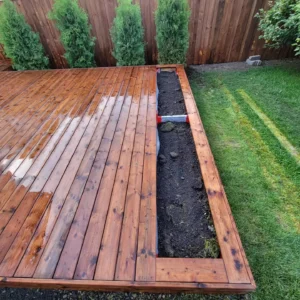
Natural wood can provide warmth and character, but homeowners should understand that exterior wood generally requires ongoing care to maintain its appearance and protect it from weather exposure.
Composite decking is another option for homeowners who want to reduce routine refinishing. Composite products still require cleaning, but many do not require the recurring sanding, staining, and sealing associated with traditional wood decking.
The right choice depends on budget, preferred appearance, product characteristics, and how much maintenance the household is willing to perform.
Consider Composite Decking
Composite decking has become a popular choice for homeowners interested in lower-maintenance outdoor living.
It can provide a wood-inspired appearance while reducing some of the maintenance associated with natural lumber.
Depending on the manufacturer and product line, routine care may primarily involve removing debris and periodic washing.
That can be appealing for busy households that would rather spend summer weekends using the deck instead of refinishing it.
Remember That Low Maintenance Is Not No Maintenance
Even composite decking requires care.
Leaves, pollen, dirt, food spills, and other debris should not simply remain on the surface indefinitely.
Regular sweeping and occasional cleaning can help keep the deck looking better and reduce buildup.
Homeowners should always follow the care instructions provided by the manufacturer of their particular decking product.
Consider Aluminum Railings
Railings can become another maintenance consideration.
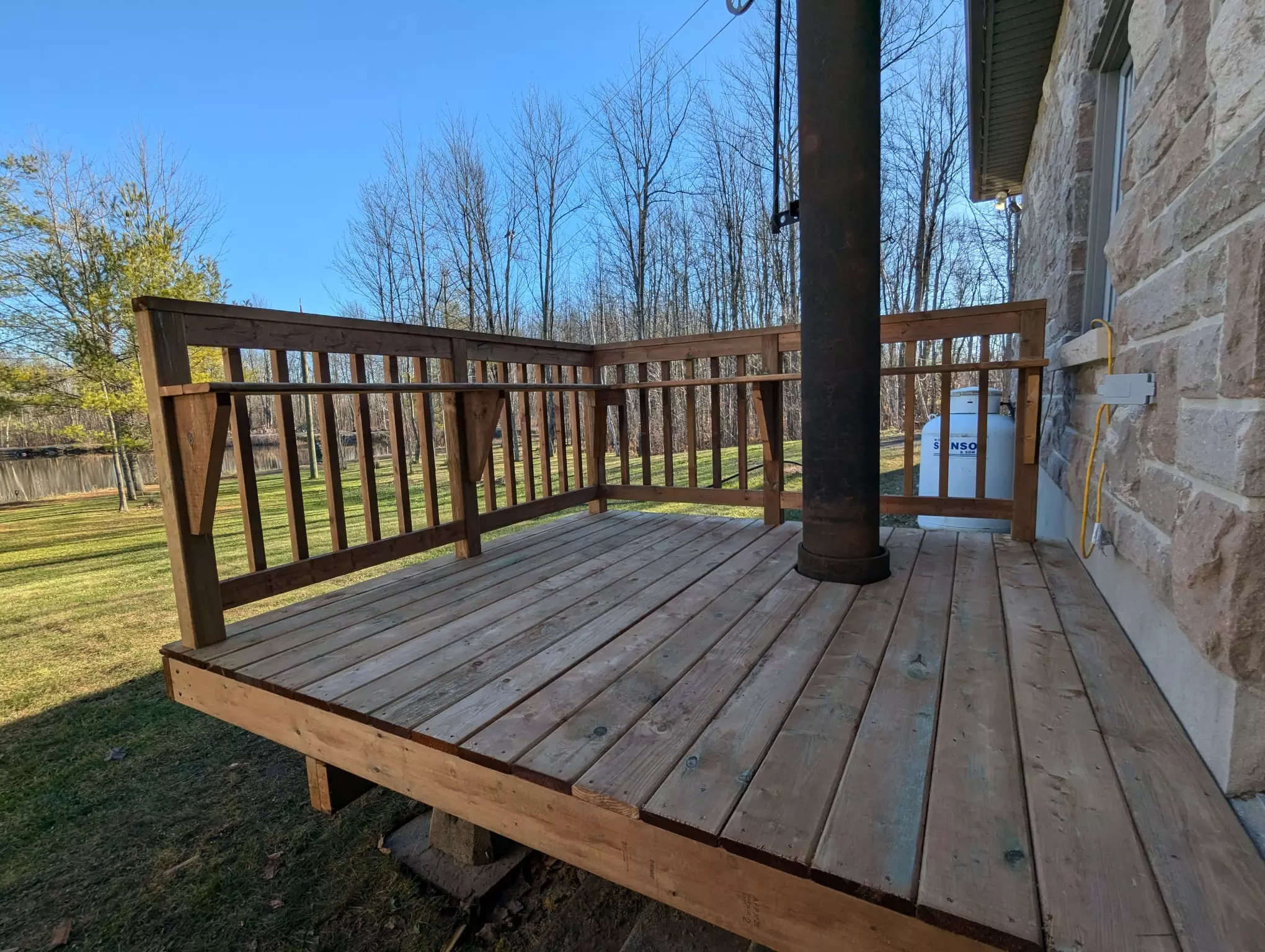
Painted or stained wood railings may eventually require refinishing depending on their construction and exposure.
Aluminum railing systems can provide a lower-maintenance alternative.
Black aluminum is particularly popular because it pairs well with many decking colours and can create a clean contemporary appearance.
Its relatively slim profile can also preserve views toward the yard.
Keep the Deck Shape Straightforward
Complicated deck geometry can look interesting, but every additional corner can increase construction complexity and create another location where dirt, leaves, and snow collect.
A simple rectangular or L-shaped deck is often easier to maintain.
Visual interest can still come from:
- Picture-frame decking
- Railings
- Furniture
- Pergolas
- Landscaping
Good design does not require complicated geometry.
Use Picture-Frame Borders Strategically
A picture-frame border can give a relatively simple deck a custom appearance.
A darker border around a wood-inspired composite deck can coordinate with black aluminum railings and furniture.
This allows homeowners to create visual detail without adding numerous structural features that require maintenance.
The decking pattern and supporting framing should be planned together from the beginning.
Avoid Too Many Deck Levels
Multi-level decks can be useful on sloped properties, but unnecessary level changes can create more stairs, railings, corners, and surfaces to maintain.
If the backyard can function comfortably with one main deck level, keeping the design simple may reduce long-term upkeep.
Where elevation changes are necessary, make them purposeful.
Build Wide, Simple Stairs
Deck stairs should be comfortable and straightforward.
Wide stairs can create an attractive transition to the yard without requiring elaborate shapes.
Keeping stair geometry simple also makes seasonal cleaning and snow removal easier.
Integrated lighting can improve visibility without adding visual clutter.
Create Clear Circulation
A low-maintenance backyard should be easy to move through.
Plan obvious routes between the house, deck, lawn, side gate, and other outdoor areas.
Avoid creating narrow spaces between furniture, planters, and structures.
Open circulation makes sweeping, washing, snow clearing, and general maintenance much easier.
Keep the Dining Area Close to the House
Outdoor dining works best when it is convenient.
Positioning the table close to the kitchen reduces unnecessary walking.
It also prevents homeowners from feeling like they need a second full kitchen outdoors just to make the deck functional.
A simple dining arrangement can provide everything many families actually need.
Keep the Cooking Area Simple
An elaborate outdoor kitchen can be attractive, but it also introduces more surfaces, equipment, utilities, and components that need maintenance.
For homeowners prioritizing simplicity, a well-positioned barbecue and durable preparation surface may be enough.
Cooking equipment should always be located according to manufacturer clearance and ventilation requirements.
Choose Outdoor Furniture Carefully
Outdoor furniture can either simplify or complicate backyard maintenance.
Before purchasing a large collection, consider how much furniture the family realistically needs.
A dining table and compact lounge arrangement may provide enough seating for everyday use.
Fewer pieces mean less furniture to move during cleaning and fewer cushions to store.
Choose Furniture That Fits the Space
Oversized furniture can make a deck difficult to clean.
Leave enough space around tables, chairs, and sectionals to sweep or wash the surface.
Furniture should complement the deck dimensions rather than occupy every available square foot.
Reduce Cushion Clutter
Outdoor cushions make seating more comfortable, but dozens of cushions can create storage problems.
Choose seating that remains practical without excessive accessories.
When cushions are used, create a convenient storage location nearby.
If storage is difficult, cushions often end up permanently covering the deck or filling indoor rooms.
Add Built-In Storage
Built-in storage can help keep a low-maintenance backyard organized.
Depending on the design, storage may be incorporated into:
- Benches
- Cabinets
- Under-deck areas
This can provide convenient space for cushions, toys, and small outdoor accessories.
Outdoor storage should be designed for appropriate drainage and ventilation.
Use Built-In Seating Selectively
Built-in benches can reduce the amount of movable furniture needed.
A bench along the deck perimeter can provide several seats without filling the floor with chairs.
It may also help define a lounge or conversation area.
Keep the design straightforward so debris does not collect in unnecessary gaps.
Create a Low-Maintenance Privacy Strategy
Privacy does not need to involve maintaining a massive hedge.
Custom screens can provide targeted privacy exactly where it is needed.
For example, a screen might block views from one neighbouring property while the rest of the deck remains open.
This can reduce both landscaping maintenance and the feeling of enclosure.
Consider Composite Privacy Screens
Depending on the desired appearance and product availability, composite or other low-maintenance exterior materials can be considered for privacy features.
These may reduce recurring refinishing compared with certain natural wood applications.
However, screens must still be designed for wind loads and appropriate structural support.
Large privacy panels should never be treated as purely decorative features.
Use Natural Wood as an Accent
Homeowners who love wood do not necessarily need to eliminate it.
Instead of constructing every backyard feature from natural wood, consider using it selectively.
For example:
Composite deck + aluminum railing + wood pergola or feature screen
can provide natural warmth without making every major surface dependent on recurring wood maintenance.
This balance can work particularly well in Carleton Place and Perth homes where homeowners want a natural backyard aesthetic.
Keep Pergola Design Simple
Pergolas can create shade and architectural definition.
A simple pergola with clean lines is generally easier to maintain than an elaborate structure with numerous decorative components.
Homeowners should also think carefully about whether climbing vegetation will be added.
While vines can look beautiful, they can introduce additional pruning, leaf cleanup, moisture, and maintenance.
Consider Partial Shade
Covering the entire backyard is not always necessary.
A pergola, awning, or other suitable shade solution over the primary seating area may provide enough comfort.
Keeping part of the deck open can reduce structural complexity while giving homeowners a choice between sun and shade.
Choose Landscaping That Fits Your Lifestyle
Low-maintenance landscaping does not mean eliminating plants.
It means selecting plants and layouts that do not demand constant intervention.
Consider:
- Mature plant size
- Sun exposure
- Soil conditions
- Water needs
- Pruning requirements
Choosing plants for the actual site conditions can reduce ongoing maintenance significantly.
Use Larger Garden Beds Instead of Tiny Ones
Several tiny garden beds scattered around the property can create additional edges that need trimming.
A few larger, well-defined planting areas may be easier to maintain.
They can also create a stronger visual impact.
Group plants according to similar growing requirements where practical.
Use Mulch Appropriately
Mulch can help garden beds retain moisture and reduce weed pressure while creating a cleaner finished appearance.
It still needs occasional attention and replenishment.
Keep mulch appropriately separated from vulnerable building components and avoid piling it against deck posts, siding, or other areas where persistent moisture could cause problems.
Choose Plants Based on Mature Size
A small shrub at the garden centre may eventually become much larger.
Planting without considering mature size can lead to constant pruning.
It can also cause plants to crowd:
- Decks
- Stairs
- Fences
- Pathways
Allow enough room for plants to develop naturally.
Avoid Overplanting
A newly landscaped garden can initially look sparse.
That does not mean every empty area needs another plant.
As landscaping matures, plants expand and fill space.
Leaving appropriate room can reduce pruning and improve airflow.
Use Native and Regionally Appropriate Plants
Plants suited to local growing conditions can often integrate more naturally into an Ontario landscape.
Homeowners interested in reducing garden maintenance should investigate species appropriate for their specific soil, moisture, sunlight, and property conditions.
Plant selection should still consider mature size and how the backyard is used.
Use Planters Selectively
Planters are excellent for adding colour and greenery to a deck, but too many containers create more watering and maintenance.
Instead of numerous small pots, consider a few larger planters.
They can create stronger visual impact while reducing clutter.
Consider Automated Irrigation
For homeowners with substantial landscaping, an appropriately designed irrigation system may reduce repetitive watering.
Drip irrigation can be useful for certain beds and planters.
Automation should still respond to actual plant needs and weather conditions rather than watering unnecessarily.
Reduce Lawn Where It Makes Sense
A large lawn requires mowing, trimming, fertilizing, and other seasonal care.
Some homeowners may choose to reduce lawn area by adding:
- Larger garden beds
- Deck
- Patio
- Groundcover
- Naturalized planting
However, eliminating every section of lawn is not always necessary.
A smaller, well-shaped lawn can provide flexible recreation space while remaining easier to maintain.
Keep Lawn Shapes Easy to Mow
If keeping grass, avoid narrow strips and awkward corners.
Simple lawn geometry makes mowing easier.
Curved garden edges can look attractive, but excessive complexity increases trimming.
Think about maintenance equipment while planning landscaping—not after installation.
Combine Deck and Patio Areas
A deck does not have to cover the entire outdoor living space.
A raised deck near the house can transition to a ground-level patio.
The deck might support dining and cooking while the patio provides lounge seating.
This can create visual variety without requiring a massive elevated structure.
Choose Patio Materials Carefully
Different patio materials have different installation and maintenance considerations.
Homeowners should compare factors such as:
- Durability
- Drainage
- Weed management
- Freeze-thaw performance
- Repairability
Proper base preparation is particularly important in Ontario conditions.
Pay Attention to Drainage
A low-maintenance backyard begins with good water management.
Poor drainage can create:
- Standing water
- Mud
- Ice
- Landscape damage
- Premature material deterioration
Decks, patios, gardens, and other improvements should work with the property’s drainage rather than interfere with it.
Keep Water Away From the House
Backyard renovations should not direct water toward the foundation.
Patios and landscaping should be planned with appropriate grading.
Downspouts and existing drainage routes also need to remain functional.
A beautiful backyard becomes high maintenance very quickly if water management is ignored.
Avoid Water Traps Around Carpentry
Custom benches, screens, planters, and other features should be designed so they can dry.
Persistent moisture against wood can contribute to deterioration.
Details that allow drainage and airflow can make outdoor carpentry easier to maintain over time.
Plan for Leaves
Trees provide valuable shade and character, but they also produce leaves and organic debris.
Avoid creating dozens of tight deck corners where leaves become trapped.
Keep enough clearance around built-in features to make sweeping straightforward.
A simple deck surface is much faster to clean.
Preserve Healthy Mature Trees Where Practical
Low maintenance does not necessarily mean removing established trees.
Mature trees can provide:
- Shade
- Privacy
- Character
These benefits might otherwise require additional constructed features.
Deck and patio layouts can sometimes be designed around valuable existing landscape elements.
Add Landscape Edging Thoughtfully
Defined garden edges can keep the backyard looking organized.
The best edging is not necessarily the most elaborate.
Choose something durable that suits the landscape and does not create unnecessary trimming work.
Consistency across the property can make a simple garden feel much more intentional.
Limit Decorative Features
Outdoor stores offer endless accessories.
Lanterns, statues, small planters, signs, cushions, rugs, and decorative objects can quickly fill a backyard.
Every additional item eventually needs cleaning, storage, or replacement.
A more restrained approach can actually make the backyard look more refined.
Use a Limited Material Palette
One of the easiest ways to create a sophisticated low-maintenance space is to use fewer materials.
For example:
Wood-tone composite + black aluminum + neutral stone + greenery
creates enough visual variation without becoming complicated.
Repeating the same finishes also makes future repairs and additions easier to coordinate.
Choose a Timeless Colour Palette
Highly specific trends can become dated.
Neutral colours often provide more flexibility as furniture and landscaping change.
Warm wood-inspired decking, charcoal accents, black railings, and natural landscaping can work across many architectural styles.
Add Lighting That Requires Little Attention
Exterior LED lighting can provide effective illumination with relatively low energy use and long service life compared with older lamp technologies.
Lighting can be integrated around:
- Stairs
- Railings
- Pergolas
- Pathways
Keep the system simple.
Too many fixtures can make maintenance and troubleshooting more complicated.
Prioritize Stair Lighting
If only a limited amount of lighting is being installed, start with circulation and elevation changes.
Stairs and pathways should be easy to identify after dark.
Additional decorative lighting can then be added where it contributes to atmosphere.
Use Timers or Smart Controls
Automated controls can simplify exterior lighting.
Rather than manually switching multiple fixtures every evening, appropriate timers or smart controls can manage routine operation.
Exterior electrical equipment should be rated and installed for its intended environment.
Keep Pathways Wide and Simple
Narrow stepping-stone routes can be attractive but may require more trimming and maintenance.
A straightforward pathway from the gate to the deck is often easier to keep clean.
Think about how people actually move through the yard.
Direct circulation usually creates a more practical landscape.
Keep Utility Areas Accessible
Do not build low-maintenance landscaping that makes home maintenance more difficult.
Maintain suitable access to:
- Air-conditioning equipment
- Utility meters
- Hose connections
- Exterior electrical equipment
Plants also need to be positioned with their mature dimensions in mind.
Hide Garbage and Equipment Without Complicating Access
A simple privacy screen can hide garbage bins, garden equipment, or storage areas.
Keep the enclosure easy to open and clean.
Functional areas should remain convenient even when they are visually screened.
Create a Practical Side Yard
Side yards often become cluttered because they were never deliberately planned.
A clear surface, accessible gate, and organized storage can make this area much easier to maintain.
The side yard can handle practical functions while keeping the main backyard focused on outdoor living.
Plan Snow Storage Before Winter
Carleton Place and Perth homeowners need to think about winter during the design stage.
Snow removed from:
- Deck
- Stairs
- Patio
- Walkways
needs somewhere to go.
Avoid creating a backyard where snow can only be piled against delicate landscaping or important structures.
Make Stairs Easy to Clear
Complicated stair shapes can be frustrating in winter.
Simple, reasonably generous stairs are generally easier to clear.
Follow the decking manufacturer’s recommendations regarding snow and ice removal products and tools.
Different materials can have different care requirements.
Store Furniture Efficiently
Before buying outdoor furniture, decide where it will go during winter.
Furniture that requires extensive seasonal storage can create more work than expected.
Choose pieces that suit the available storage and the homeowner’s preferred maintenance routine.
Consider a Covered Storage Area
A properly designed storage area beneath an elevated deck or elsewhere on the property may help organize seasonal items.
Water management is important.
A standard deck surface is not automatically waterproof, so anything requiring dry storage needs appropriate protection.
Use Durable Fencing
Fencing is another major maintenance consideration.
Natural wood offers warmth and character but generally requires periodic care if homeowners want to maintain a particular finish.
Alternative materials may reduce some recurring maintenance.
The best choice depends on appearance, budget, property requirements, and long-term expectations.
Keep Fence Design Straightforward
Elaborate fence details can create more surfaces and joints that collect dirt and moisture.
Simple vertical or horizontal designs can create a clean appearance while remaining easier to inspect and maintain.
Coordinate the fence with the deck rather than treating them as unrelated projects.
Create Privacy Without a Huge Hedge
Hedges can provide beautiful natural privacy, but they may require trimming and ongoing care.
Homeowners who want less garden work can combine a modest amount of planting with structural privacy screens.
This provides greenery without depending entirely on a large formal hedge.
Use Layered but Simple Privacy
A low-maintenance privacy strategy might include:
Fence → small planting bed → targeted deck screen
Each component performs part of the job.
The backyard gains depth without requiring dense landscaping everywhere.
Build Around How You Actually Entertain
A backyard should reflect everyday life.
If the household typically hosts six people, do not design every feature around accommodating thirty.
A comfortable dining table, barbecue, and lounge may provide everything needed.
Designing for realistic use prevents unnecessary construction and maintenance.
Leave Some Open Space
Open space is easy to underestimate.
Not every corner needs a structure.
A section of lawn or open patio can provide:
- Children’s play
- Pet space
- Flexible entertaining
- Visual breathing room
Open space can also make the permanent features feel more important.
Avoid Trend Overload
Today’s popular backyard feature may not fit the household five years from now.
Build permanent structures around long-term functions such as:
- Dining
- Shade
- Privacy
- Circulation
Use furniture and accessories for trends that may change more frequently.
Plan for Future Upgrades
Low-maintenance design also means avoiding expensive reconstruction.
If a pergola, patio, or outdoor kitchen might be added later, consider it during the initial deck plan.
Future-ready framing, circulation, and utility planning can make later improvements much easier.
Inspect the Deck Periodically
Even low-maintenance decks need inspection.
Homeowners should periodically look at:
- Stairs
- Guards
- Fasteners
- Structural components
- Surface condition
Identifying a small issue early is generally easier than waiting for it to become a major repair.
Clean Before Dirt Becomes a Bigger Problem
Routine cleaning does not need to be complicated.
Sweep leaves and debris before they accumulate.
Clean spills promptly.
Follow manufacturer instructions for the decking, railing, furniture, and other materials.
A few simple habits can prevent more difficult cleaning later.
Avoid Designing Around Constant Maintenance
This should be the guiding principle.
Every feature added to the backyard should answer one question:
Will we enjoy this enough to justify maintaining it?
If the answer is no, reconsider it.
A smaller number of well-designed features can produce a better outdoor living space than an overloaded backyard.
Consider Professional Planning Before Construction
Low-maintenance design requires more than choosing composite decking.
The entire project should consider:
- Drainage
- Framing
- Landscaping
- Privacy
- Stairs
- Materials
- Snow
- Storage
- Future improvements
Planning these elements together can prevent one low-maintenance feature from creating maintenance problems somewhere else.
FAQs About Low-Maintenance Outdoor Living Spaces
What is the best low-maintenance decking option?
Composite decking is one popular option because many products do not require the recurring sanding, staining, and sealing associated with traditional wood. It still requires periodic cleaning, and homeowners should follow the specific manufacturer’s care instructions.
Is composite decking completely maintenance-free?
No. Dirt, pollen, leaves, food, and other debris still need to be removed. Low maintenance should not be confused with zero maintenance.
How can I make landscaping easier to maintain?
Use plants suited to the site’s sunlight, soil, and moisture conditions, allow enough room for mature growth, avoid overcrowding, and consider larger defined planting areas instead of many tiny beds.
What railing is easiest to maintain?
Aluminum railings are commonly chosen by homeowners looking for a durable, relatively low-maintenance railing system. Product-specific cleaning and care recommendations still apply.
Should I eliminate my lawn completely?
Not necessarily. A smaller, simply shaped lawn can provide valuable flexible space while requiring less maintenance than a large or complicated lawn.
Are pergolas low maintenance?
It depends on the material and design. Natural wood pergolas typically require more ongoing care than some alternative materials. Simpler designs are generally easier to inspect and maintain.
Do decks require building permits in Carleton Place and Perth?
Municipal requirements differ, so homeowners should check with the municipality where the property is located. Carleton Place’s Building Department currently lists decks, landings, ramps, verandahs, and platforms serving a dwelling among residential projects requiring a building permit, while Perth provides its own deck permit application and residential deck-building guidance. Town of Carleton Place
Final Thoughts
Creating a low-maintenance backyard in Carleton Place or Perth is not about eliminating every natural material or outdoor feature. It is about deciding where maintenance is worthwhile. Natural wood might be perfect for one architectural accent, while composite decking, aluminum railings, simple landscaping, and a straightforward layout can handle the larger areas that would otherwise require more routine work.
For homeowners comparing deck materials, Trex’s low-maintenance decking guide explains the maintenance differences between composite and traditional wood decking. Composite still needs care, but modern products can substantially reduce recurring refinishing. For ongoing upkeep, the company’s composite deck cleaning guide provides practical cleaning recommendations for keeping the surface free of dirt and debris.
Landscaping should receive the same attention as decking. Landscape Ontario is a useful resource for Ontario homeowners researching plants and landscape planning, while the Canadian Wildlife Federation’s gardening resources can provide additional inspiration for incorporating plants and habitat-friendly landscaping without treating the entire backyard as a formal garden.
Before building in Carleton Place, homeowners should review the Town of Carleton Place Building Department, which provides deck-building information and identifies decks and related structures serving dwelling units among projects requiring permits. Town of Carleton Place Homeowners in Perth can similarly consult the Town of Perth’s building and renovating resources, where deck permit applications, residential deck guides, guard information, and sample site-plan resources are available. Town of Perth
The best low-maintenance outdoor living space is ultimately one that remains enjoyable after the excitement of the renovation is over. By choosing durable materials, simplifying the layout, planning drainage and storage, controlling landscaping, and building only the features the household will genuinely use, Carleton Place and Perth homeowners can spend less time maintaining their backyards and more time actually enjoying them.