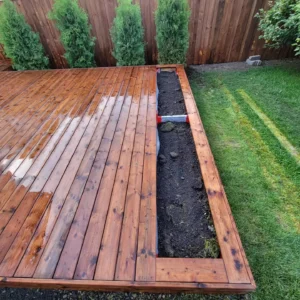
Modern deck design is becoming much more than choosing decking boards and adding a railing. Homeowners increasingly want outdoor spaces that feel intentional, comfortable, connected to nature, and visually integrated with the rest of the backyard.
Built-in planters fit naturally into that approach.
Instead of placing several freestanding flowerpots around a finished deck, planters can be incorporated directly into the deck layout. They can frame seating areas, soften corners, introduce greenery beside dining spaces, create natural privacy, or help transition between the deck and surrounding landscaping.
For homeowners across Kanata, built-in planters can be especially effective when designing contemporary decks with composite materials, aluminum railings, pergolas, privacy screens, and custom seating.
The key is planning them correctly from the beginning. Drainage, structural loads, mature plant size, moisture management, and available deck space all need consideration. When those details are handled properly, built-in planters can become one of the features that makes a deck feel genuinely custom.
Built-In Planters Make a Deck Feel More Complete
One reason built-in planters are attractive in modern deck design is visual integration.
A freestanding planter is an accessory placed on the deck.
A built-in planter becomes part of the architecture.
Its proportions, materials, location, and planting can be coordinated with the deck itself.
That creates a much cleaner appearance.
Instead of finishing the deck and then trying to figure out where greenery should go, the planting becomes part of the original design.
They Bring Landscaping Onto the Deck
Traditional deck layouts often create a clear separation between the hard surface of the deck and the softer landscape below.
Built-in planters can reduce that separation.
Flowers, ornamental grasses, herbs, shrubs, or other suitable plants can be brought directly into the outdoor living area.
This helps the deck feel connected to the backyard rather than sitting above or beside it.
The effect can be particularly attractive on elevated decks where the garden would otherwise feel visually distant.
They Can Soften Composite Deck Designs
Composite decking can create a clean contemporary appearance, but large uninterrupted surfaces can sometimes feel visually hard.
Greenery provides contrast.
Imagine a modern Kanata deck with warm wood-inspired composite boards, black aluminum railings, and a built-in planter filled with greenery.
The plants introduce movement, texture, and seasonal colour.
That contrast can make both the landscaping and the deck materials look better.
Built-In Planters Can Define Different Deck Zones
Modern decks increasingly function as outdoor rooms.
A single deck might contain:
Cooking → Dining → Lounge
Built-in planters can help distinguish these areas without adding walls.
For example, a long planter positioned between the dining table and lounge furniture can create subtle separation.
People still see across the entire deck, but each activity has a clearer location.
This works particularly well on larger Kanata decks designed for entertaining.
They Can Separate Dining and Lounge Areas
A planter can create a natural boundary between two furniture arrangements.
Instead of placing a privacy screen or railing between them, greenery provides softer separation.
Low planting can preserve views across the deck.
Taller planting can create stronger visual definition.
The appropriate approach depends on how much separation homeowners want.
They Can Define a Conversation Corner
Built-in planters work especially well around lounge seating.
An L-shaped bench might have planters at either end.
This creates a framed conversation area without completely enclosing it.
Add a coffee table and a few comfortable chairs, and an otherwise ordinary deck corner becomes a clearly defined outdoor room.
They Can Improve Deck Privacy
Privacy is another reason homeowners may incorporate planters.
Instead of relying exclusively on solid privacy walls, appropriately selected plants can provide softer visual screening.
A long planter positioned along a neighbour-facing side of the deck can support taller vegetation.
The combination can interrupt sightlines while preserving a more natural atmosphere.
Combine Planters With Privacy Screens
Built-in planters and privacy screens can work particularly well together.
Consider a layout such as:
Built-in bench → planter → slatted privacy screen
The screen provides dependable structural privacy.
The planter softens the appearance.
Together, they can feel much more intentional than a plain wall.
Use Plants to Soften Tall Screens
Large privacy screens can sometimes dominate a smaller deck.
Planting at the base helps reduce their visual weight.
Grasses, foliage, or flowering plants can create a transition between the deck floor and vertical screen.
This layered approach can make a privacy feature feel like part of the landscape.
Built-In Planters Can Save Usable Floor Space
Freestanding containers consume valuable deck space.
Several large pots positioned around a small deck can interfere with:
- Furniture
- Doors
- Circulation
- Stairs
Integrated planters can be designed around areas that might otherwise be underused.
Corners are particularly useful.
A planter incorporated into a deck corner can introduce significant greenery without leaving a random container in the middle of a circulation path.
They Can Make Small Decks Feel More Organized
Small decks benefit from intentional design.
Rather than adding numerous separate accessories, one built-in feature can perform several functions.
A planter might:
- Add greenery
- Define seating
- Create privacy
- Fill an awkward corner
Combining functions can make a compact deck feel more organized.
Planters Can Be Integrated With Built-In Benches
One of the most effective combinations is seating plus planting.
A bench can terminate at a planter on one or both ends.
This creates a custom furniture-like installation.
It also provides a natural transition between the hard lines of the bench and softer landscaping.
The bench and planter can share materials or contrasting finishes depending on the design.
Create an L-Shaped Seating Area
An L-shaped built-in bench can wrap around a deck corner with a planter incorporated where the two directions meet.
This creates a natural focal point.
The planter prevents the corner from feeling empty while adding colour behind the seating.
It can work particularly well beneath a pergola.
Use Planters Behind Benches
Another option is positioning a planter behind built-in seating.
The planting becomes the backdrop for the lounge.
This can be particularly effective when the deck faces a fence or neighbouring property.
Instead of looking directly at a hard boundary, people see greenery behind the seating area.
Planters Can Make Deck Stairs More Attractive
Stair transitions can sometimes feel abrupt.
Built-in planters can help soften them.
A planter positioned beside a wide staircase can visually connect the deck with the garden below.
Plants can create a gradual transition between the architecture of the deck and surrounding landscape.
Frame Wide Deck Stairs
Wide stairs are increasingly used to create a stronger connection between decks and backyards.
Planters positioned near the sides can emphasize that transition.
The stairs become more than a functional route.
They become part of the overall landscape composition.
Any planter placement must still preserve required stair widths, guards, handrails, and safe circulation.
Use Planters Around Landings
Larger stair landings can sometimes feel visually empty.
A properly positioned planter may introduce greenery without interfering with movement.
The planter should never reduce necessary circulation or create an obstruction near stairs.
Built-In Planters Can Create a Better Deck-to-Garden Transition
A deck often contains straight architectural lines.
Gardens tend to feel softer and more organic.
Planters can connect these two visual languages.
Plants begin on the deck and continue into beds around the structure.
This creates the impression that the deck was designed as part of the landscape rather than installed independently.
Repeat Plants From the Garden
One effective strategy is using similar plants in both the built-in planters and surrounding landscape.
Repeating colours, foliage shapes, or plant varieties creates visual continuity.
The eye naturally moves from the deck toward the garden.
This can make even a relatively compact backyard feel more cohesive.
Use Planters to Frame Backyard Views
Not every planter needs to create privacy.
Some can frame a view instead.
Two planters positioned around an open railing section can direct attention toward:
- Garden
- Mature tree
- Lawn
- Patio
This is similar to framing a picture.
The greenery defines the view without blocking it.
They Can Add Seasonal Colour
Built-in planters provide opportunities to change the appearance of the deck throughout the outdoor season.
Depending on plant selection, homeowners may introduce:
- Spring colour
- Summer flowers
- Autumn foliage
The deck itself remains relatively neutral while planting provides seasonal variation.
This allows the backyard to evolve without changing permanent materials.
Use Foliage for a More Modern Look
Flowers are not the only option.
Modern deck designs can look particularly attractive with foliage-focused planting.
Ornamental grasses and other textural plants can complement contemporary architecture.
Limiting the number of colours can create a cleaner appearance.
The emphasis becomes texture, height, and movement rather than a highly colourful garden.
Consider Evergreens Carefully
Some homeowners want planters to retain visual interest beyond summer.
Suitable evergreen planting may provide structure for longer periods.
However, plants in containers experience different conditions from plants growing directly in the ground.
Winter exposure, root-zone temperatures, drainage, container dimensions, and plant hardiness all need consideration.
Plant selection should therefore be appropriate for container growing and local conditions.
Built-In Planters Can Support Herb Gardens
Planters near outdoor dining or cooking areas can potentially support herbs.
Depending on sunlight and growing conditions, homeowners may consider culinary plants suited to the location.
This creates a practical connection between gardening and entertaining.
The planter should still be positioned away from excessive cooking heat and grease.
They Can Make an Outdoor Kitchen Feel More Natural
Outdoor kitchens contain many hard surfaces.
Counters, cabinetry, appliances, decking, and privacy structures can make the area feel highly architectural.
Greenery can soften those surfaces.
A planter beside—not directly against—a cooking zone can provide a more relaxed atmosphere.
Appliance clearances and ventilation requirements should always determine the final arrangement.
Built-In Planters Can Complement Pergolas
Pergolas introduce strong vertical lines.
Planters can soften the base of those structures.
For example, a planter might be incorporated near a pergola post or along one side of the covered lounge.
This helps connect the overhead structure to the rest of the backyard.
Create a Garden-Like Pergola Lounge
Imagine a pergola covering an outdoor sectional.
A built-in planter runs behind the seating while another sits near the open end.
The result feels more like a garden room than a standard deck.
This combination can provide shade, privacy, greenery, and architectural definition in one area.
Use Planters Around Pergola Entrances
Two planters can help visually mark the entrance to a pergola-covered area.
This creates a subtle transition from the open deck into the shaded lounge.
No walls are necessary.
The architecture and landscaping define the space together.
They Can Help Break Up Large Deck Surfaces
Large decks can sometimes feel empty.
Adding more furniture is not always the solution.
Built-in planters can interrupt long stretches of decking and introduce vertical interest.
This is particularly useful when a large deck contains several functional zones.
The planter becomes an architectural feature rather than simply decoration.
Long Planters Can Define Deck Edges
A linear planter can create a strong contemporary appearance.
It might run along part of the perimeter while leaving other sections open.
This works particularly well with horizontal architectural lines.
The planter can coordinate visually with picture-frame decking, privacy screens, or benches.
Corner Planters Can Improve Awkward Areas
Deck corners are frequently underused.
Furniture rarely fits perfectly into every corner.
A built-in planter can turn that leftover space into a deliberate feature.
This is especially effective where two railings or privacy screens meet.
Planters Can Create Better Proportions
Sometimes a deck feels too wide or visually empty.
A planter can reduce the apparent scale without physically closing the area.
This is useful when the deck needs to accommodate large gatherings but should still feel comfortable during everyday use.
Plants provide visual intimacy while leaving circulation open.
They Can Add Height Without Building a Wall
Outdoor spaces often need vertical elements.
Without them, everything exists at approximately railing or furniture height.
Plants introduce another layer.
Tall ornamental planting can add height while remaining softer than a solid structure.
This can make the deck feel more established.
Combine Different Plant Heights
A built-in planter does not need one uniform row of plants.
A layered composition can include:
- Taller focal plants
- Mid-height foliage
- Lower trailing plants
This creates greater visual depth.
Plant selection should be based on sunlight, moisture, planter depth, and mature size rather than appearance alone.
Planter Design Should Match the Deck
Built-in planters are architectural features, so their materials matter.
They can be designed to coordinate with:
- Decking
- Fascia
- Privacy screens
- Pergolas
- Built-in benches
The planter should look intentional rather than like a separate box attached afterward.
Match Composite Decking
One approach is using the same or coordinating exterior finish around the planter as the deck.
This can create a seamless appearance.
For example, a warm wood-inspired deck might use matching planter cladding with black trim.
The planting then becomes the main visual contrast.
Contrast the Planter Instead
Matching is not mandatory.
A contrasting planter can become a feature.
For example:
Light decking + dark planter + black railing
can create a contemporary composition.
The important thing is repeating the accent colour elsewhere so the planter does not feel isolated.
Coordinate With Privacy Screens
If the deck already includes wood or composite privacy screens, the planter can repeat that material.
This creates continuity.
The same horizontal slat pattern might appear on both the privacy screen and planter exterior.
Small repetitions like this can make a backyard feel professionally designed.
Drainage Is Critical
Built-in planters need more than attractive cladding.
They need effective drainage.
Water should not remain trapped around roots or against vulnerable deck components.
The planter design needs a controlled path for excess water.
This is one of the most important technical details of the entire feature. Design guidance for integrated deck planters consistently emphasizes separating wet soil from structural timber and providing intentional drainage rather than allowing water to pool on or beneath the deck. Build Design Hub
Soil Should Not Sit Directly Against Structural Wood
Constantly damp soil can create serious moisture problems when placed directly against materials not designed for prolonged soil contact.
Planter construction should provide appropriate separation between planting media and vulnerable deck components.
The exact assembly depends on the materials and planter design.
This should be considered during construction rather than improvised after the planter has already been built.
Plan Where Drainage Water Goes
A planter may drain correctly internally while still creating another problem if the water empties onto an undesirable location.
Drainage should not continually discharge:
- Against the house
- Onto stairs
- Across primary walking areas
- Into locations where water can become trapped
A complete design considers where the water ultimately goes.
Planters Can Become Very Heavy
This is particularly important on elevated decks.
Soil is heavy.
Wet soil is heavier.
Then add:
- Planter structure
- Plants
- Water
- Mature root systems
A substantial built-in planter can therefore create significant additional load.
The deck structure should be designed accordingly rather than assuming any location can support a large planter.
Plan Heavy Features Before Framing
If built-in planters are desired, decide their locations before the deck framing is finalized.
This allows structural requirements to be considered from the beginning.
It is much easier than constructing a finished deck and later deciding to place a very large soil-filled planter in one corner.
Early planning also makes drainage and cladding easier to integrate.
Think About Mature Plant Size
A plant that looks appropriately sized at purchase may become considerably larger.
Before choosing planter dimensions, consider:
- Root space
- Mature width
- Mature height
- Maintenance access
The planter needs to support the plants long after the first season.
Avoid Oversized Plants in Undersized Planters
Trying to create instant privacy with very large plants can cause problems when root space is inadequate.
A better approach may be combining a structural privacy screen with moderately sized planting.
The screen provides immediate privacy.
The plants provide softness.
Neither feature is forced to perform a job it was not designed for.
Consider Sun Exposure
Different areas of a Kanata deck can have dramatically different growing conditions.
A planter beside the house may receive substantial shade.
Another at the deck edge may receive direct afternoon sun.
Plant selection should respond to the actual location.
Observe the property throughout the day before finalizing planting.
Consider Wind Exposure
Elevated decks can be windy.
Tall plants may experience considerably more exposure than plants at ground level.
Planter location and plant selection should account for wind.
A protected corner may support plants that would struggle along an exposed deck edge.
Think About Winter Conditions
Kanata homeowners also need to consider winter.
Planters remain outdoors through:
- Freezing temperatures
- Snow
- Ice
- Freeze-thaw cycles
Materials need to be appropriate for exterior exposure.
Drainage becomes especially important because trapped water can freeze.
Decide Whether Planting Will Be Seasonal or Permanent
Not every planter needs year-round planting.
Some homeowners may prefer seasonal arrangements that can be changed annually.
Others may want longer-term planting.
This decision affects planter size, soil, drainage, plant selection, and maintenance.
Make that decision before construction.
Keep Planters Accessible
A planter that is difficult to reach will quickly become frustrating.
Homeowners need access for:
- Watering
- Pruning
- Plant replacement
- Cleaning
Do not place a deep planter where reaching the back requires climbing over furniture.
Accessibility should be part of the layout.
Consider Irrigation
Large built-in planters may require regular watering during hot periods.
If several planters are included, homeowners may want to consider an appropriate irrigation strategy.
Planning irrigation during construction can be easier than trying to retrofit it later.
The system should still allow drainage and appropriate control of watering.
Avoid Too Many Built-In Planters
Built-in planters are attractive precisely because they feel intentional.
Using them everywhere can have the opposite effect.
Too many planters can:
- Reduce usable deck space
- Increase maintenance
- Add structural weight
- Create visual clutter
One or two well-positioned planters may have greater impact than many small ones.
Keep Furniture Space in Mind
Before deciding planter dimensions, place the proposed furniture on the deck plan.
Allow room for:
- Chairs to move
- People to walk
- Doors to open
- Barbecue access
- Stairs
A beautiful planter should not make the deck frustrating to use.
Maintain Clear Circulation
Planters can help direct movement, but they should never create bottlenecks.
A planter near a dining area might subtly guide people around the table.
However, one positioned too close to the stairs can create an unnecessary obstacle.
Functional circulation should come before decoration.
Use Planters to Guide Movement
When positioned correctly, planters can actually improve circulation.
A long planter can indicate where the lounge ends and the pathway begins.
People naturally understand the layout without needing walls or signs.
This is one reason integrated planters work so well in larger outdoor living spaces.
Combine Planters With Deck Lighting
Lighting can make planting especially attractive after sunset.
Soft fixtures may highlight:
- Foliage
- Planter texture
- Nearby privacy screens
The goal should be subtle illumination rather than excessive brightness.
Plants create interesting shadows that can make the deck feel more atmospheric at night.
Use Lighting Behind Taller Plants
Placing carefully directed light behind taller foliage can create depth.
The leaves and grasses become silhouettes against a softly illuminated background.
This can make a simple planter feel like a major design feature.
Keep Electrical Components Appropriate for Outdoor Use
Any lighting or electrical equipment around planters needs to be suitable for exterior and potentially wet environments.
Watering introduces additional moisture.
Electrical planning should therefore happen alongside planter and deck design.
Built-In Planters Work Well on Multi-Level Decks
Multi-level decks provide several natural opportunities for planting.
Planters can help mark transitions between levels.
For example:
Upper level: dining.
Planter transition: greenery.
Lower level: lounge.
This softens the elevation change and creates stronger visual separation.
Use Planters Between Deck and Patio
If a raised deck connects to a ground-level patio, built-in planting can help bridge the two materials.
A planter near the transition can visually connect decking, stone, and landscaping.
This prevents the two outdoor areas from feeling unrelated.
Planters Can Complement Hot Tub Areas
Some decks include hot tubs or spa zones.
Greenery can soften the appearance of the equipment and create a more relaxing atmosphere.
However, planter placement should maintain required access for maintenance and should not interfere with covers, electrical equipment, or safe circulation.
Privacy should also be planned separately where necessary.
Built-In Planters Can Increase the Custom Feel of a Deck
Perhaps the biggest reason these features are appealing is simple: they make the deck look designed for the property.
A standard deck can often accommodate generic furniture and containers.
A built-in planter, by contrast, responds to a specific corner, view, seating arrangement, staircase, or privacy requirement.
That customization gives the outdoor space more character.
Plan the Entire Backyard Together
Built-in planters are most successful when considered alongside:
- Deck
- Pergola
- Privacy
- Seating
- Stairs
- Landscaping
The planter should not become an isolated feature.
It should help connect these different components.
Don’t Forget the Surrounding Garden
A beautiful planter cannot compensate for a completely disconnected landscape.
Consider how the deck planting relates to garden beds below.
Repeating certain textures or colours can create continuity.
This makes the deck feel like part of a larger backyard design.
Consider Maintenance Before Choosing Plants
A low-maintenance deck can become high-maintenance if every planter requires constant watering, pruning, and replanting.
Be realistic about how much gardening the household enjoys.
Homeowners who want minimal upkeep may prefer simpler planting arrangements.
Those who enjoy gardening can use the planters much more intensively.
Design for Easy Replacement
Plants change.
Some will eventually need replacement.
Planters should allow soil and plants to be accessed without dismantling surrounding deck features.
Permanent carpentry should not make routine horticultural maintenance unnecessarily difficult.
Plan Built-In Planters Before Construction Begins
This may be the single most important recommendation.
Built-in planters are much easier to integrate when included in the original deck plan.
Their location can then influence:
- Framing
- Drainage
- Furniture
- Lighting
- Privacy
- Landscaping
Retrofitting them into an existing deck can be possible, but it may require more structural modification and compromise. Recent deck-design guidance similarly recommends incorporating planter locations during the initial design stage rather than treating them as an afterthought. core
Remember That Kanata Follows Ottawa Requirements
Kanata is part of the City of Ottawa.
Built-in planters themselves do not eliminate or replace the requirements that apply to the deck.
Depending on the deck’s height, size, attachment, and configuration, a building permit may be required.
The City currently states that an attached or adjacent deck with a walking surface more than 600 mm (24 inches) above adjacent grade requires a permit regardless of walking-surface area. Elevated decks providing principal access to a building also require permits. City of Ottawa
Plan Structural Features Properly
For deck projects requiring permits, Ottawa’s submission requirements include information about foundations, joists, beams, posts, decking, stairs, deck-to-house connections, elevations, guards, and handrails. City of Ottawa
Substantial built-in features should therefore be considered as part of the overall structural plan rather than added casually after construction.
FAQs About Built-In Deck Planters in Kanata
Are built-in planters a good idea for decks?
They can be an excellent addition when properly designed. They introduce greenery, help define outdoor zones, soften architectural materials, and can contribute to privacy.
Can built-in planters be added to an existing deck?
Potentially. However, substantial planters introduce additional weight and drainage considerations, so the existing structure should be evaluated before adding them.
What plants work best in deck planters?
The answer depends on sunlight, wind exposure, planter dimensions, drainage, maintenance expectations, and whether the planting needs to survive winter. Plant selection should be made for the specific location rather than based only on appearance.
Can built-in planters provide privacy?
Yes. Taller planting can interrupt sightlines, although combining plants with a structural privacy screen can provide more predictable screening.
Do built-in planters need drainage?
Yes. Appropriate drainage is essential. Water should not remain trapped in the planter or continually saturate vulnerable deck components.
Are built-in planters heavy?
They can be extremely heavy once filled with soil, plants, and water. Large planters on elevated decks should therefore be considered during structural planning.
Do I need a permit for a deck with built-in planters in Kanata?
Permit requirements primarily depend on the deck and overall project configuration. Kanata properties fall under the City of Ottawa, so homeowners should verify current building and zoning requirements for their specific project before construction. City of Ottawa
Final Thoughts
Built-in planters are becoming an appealing feature in modern deck design because they allow greenery to become part of the architecture rather than something added after construction. They can soften composite decking, define lounge and dining areas, improve privacy, frame stairs, and create a stronger transition between a Kanata deck and the surrounding garden.
For homeowners gathering ideas, Houzz’s built-in deck planter gallery provides examples ranging from compact integrated boxes to planters combined with seating, fencing, and larger contemporary deck layouts. Houzz also offers additional built-in planter planting ideas showing how different planting styles can change the character of an outdoor space.
For more general deck inspiration, This Old House’s deck design ideas specifically discusses incorporating built-in planters and emphasizes the importance of drainage. Planning where excess water will go is particularly important because a beautiful planter should not create moisture problems for the deck beneath it.
Kanata homeowners planning a new deck should also review the City of Ottawa’s current deck permit information. The City explains when deck permits are required and recommends confirming zoning considerations such as setbacks before construction. City of Ottawa
For projects requiring a permit, Ottawa’s sundeck submission requirements show why early planning matters: foundation locations, structural framing, stairs, deck-to-house connections, elevations, guards, and other details may need to be documented. City of Ottawa Designing the planters at the same time as the deck structure, seating, lighting, privacy, and landscaping can produce a cleaner result—and turn an ordinary deck into an outdoor living space that feels truly connected to the backyard.